Skip to content
← Back to blogOperations

Review Field Demand and Weekly Availability for Staffing Plans

Review weekly field-engineer schedules beside an on-demand demand forecast, with the inputs and limits visible.

See how it worksUnified Triage →

A weekly schedule on its own does not show incoming demand. Staffing planning starts when recurring hours sit beside a forecast for the next work period.
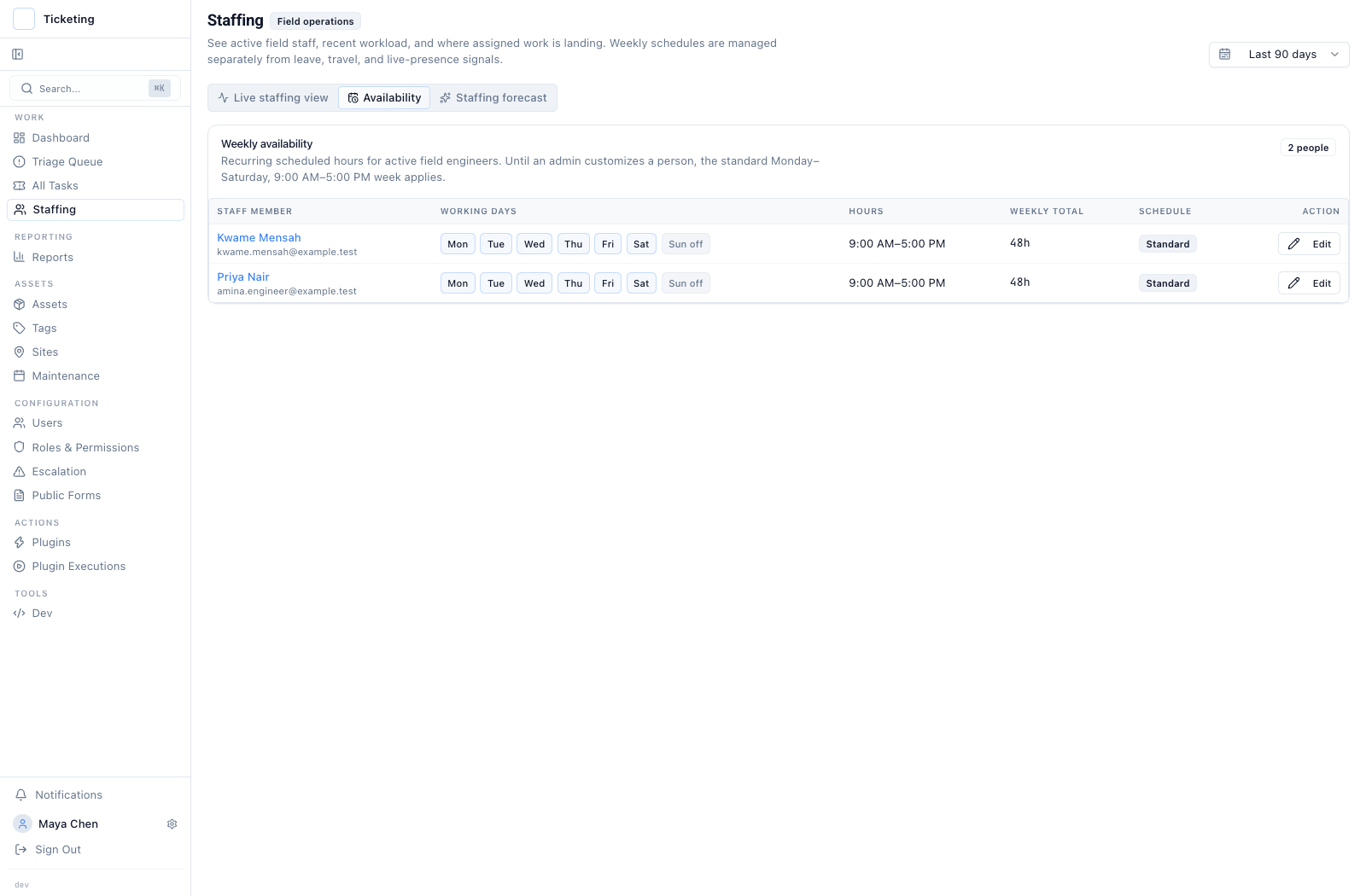
Weekly availability table listing Kwame Mensah and Priya Nair with Monday through Saturday schedules, 9 AM to 5 PM hours, and 48-hour weekly totals

The weekly schedule records recurring hours for two field engineers. The screen uses fictional sample data.

Maintain the weekly schedule

An administrator can see each active field engineer's working days, hours, and weekly total. That is enough to flag schedules that need adjusting.

Recurring hours and active-staff counts are planning inputs. Neither confirms available capacity. Leave, travel, live presence, and service-area assignments sit outside the calculation.

Use the demand forecast as a planning baseline

The forecast combines historical arrivals, active backlog, and planned maintenance across a chosen horizon and coverage area. P50 shows expected demand, P90 a higher-cover scenario. Both appear alongside reactive work and carry-in backlog.
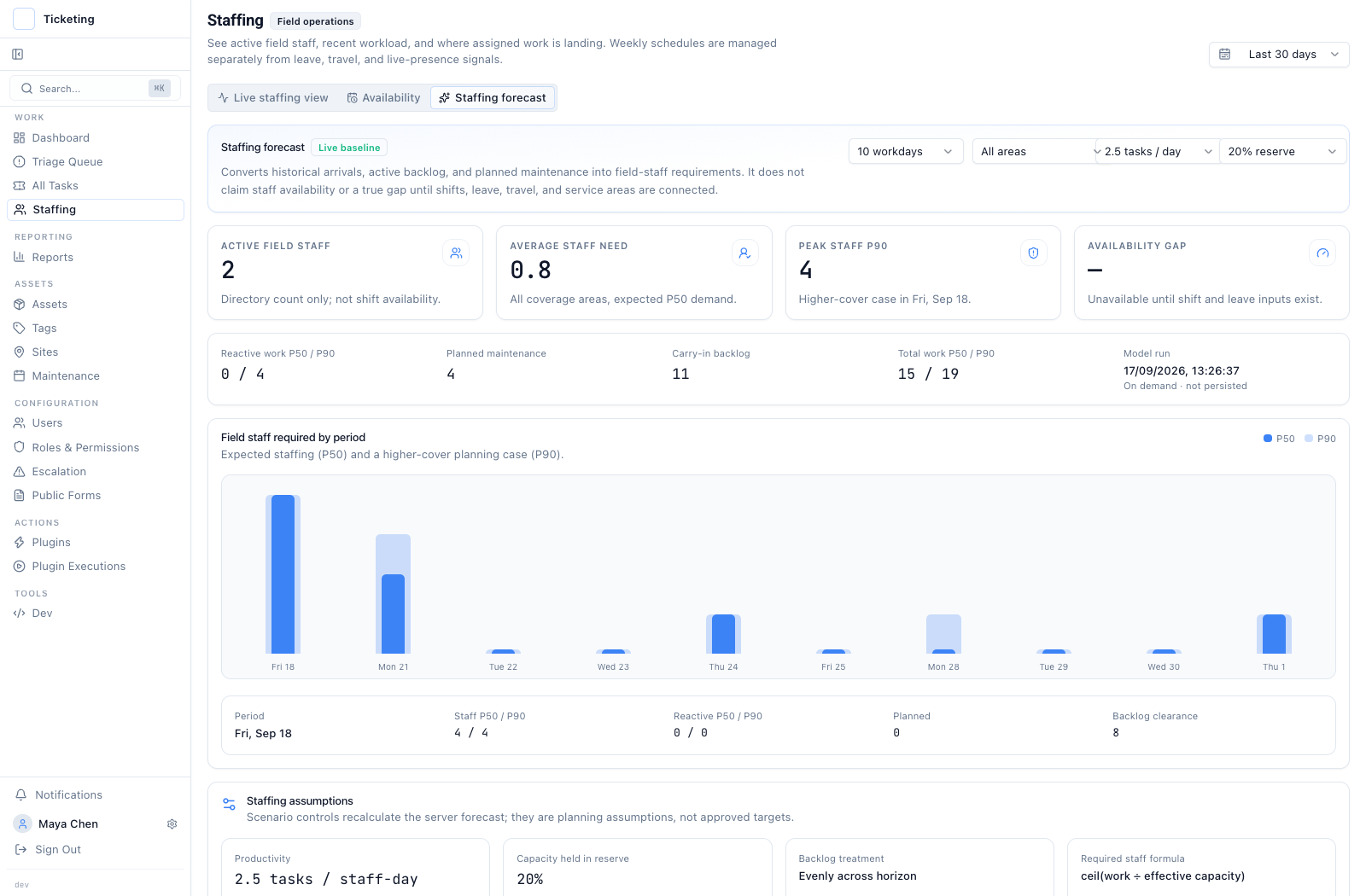
Staffing forecast showing a 10-workday horizon, P50 and P90 required-staff bars, two active field staff, and an unavailable availability gap

The forecast is generated on demand. Jobs-per-staff-day and reserve are scenario assumptions, not approved targets.

Check the assumptions and the unavailable gap before using the chart. See how operations teams manage SLA and escalations alongside this planning view.

Continue exploring
Next product pathUnified TriageSee how Latch handles email, tickets, and queue routing in one operational workflow.Related pathOperations TeamsMap these patterns into an operator workflow with queue ownership and visible downstream actions.Related pathProduct OverviewSee how unified triage, approvals, audit trails, and plugins connect.
Related reads
Read a Staff Member’s Workload and SLA HistorySeparate a staff member’s current open work from recorded ticket history, then inspect the SLA outcomes behind the totals.When Native Zendesk Approvals Are EnoughZendesk approvals can handle real ticket reviews. Learn where native approval requests fit and when execution control needs a different workflow.Ticket Routing Rules vs AI TriageCompare ticket routing rules with AI triage: where rules work, where model suggestions help, and why operator corrections remain the control.
Ready to move beyond reading?

See the same workflow running end to end.

Follow one ticket from intake through review and plugin execution. See the request, the decision, and the result in its audit trail.

See how it worksTalk to us