Priya Nair has two open tickets today. That backlog is not the same as the work recorded over a chosen period.
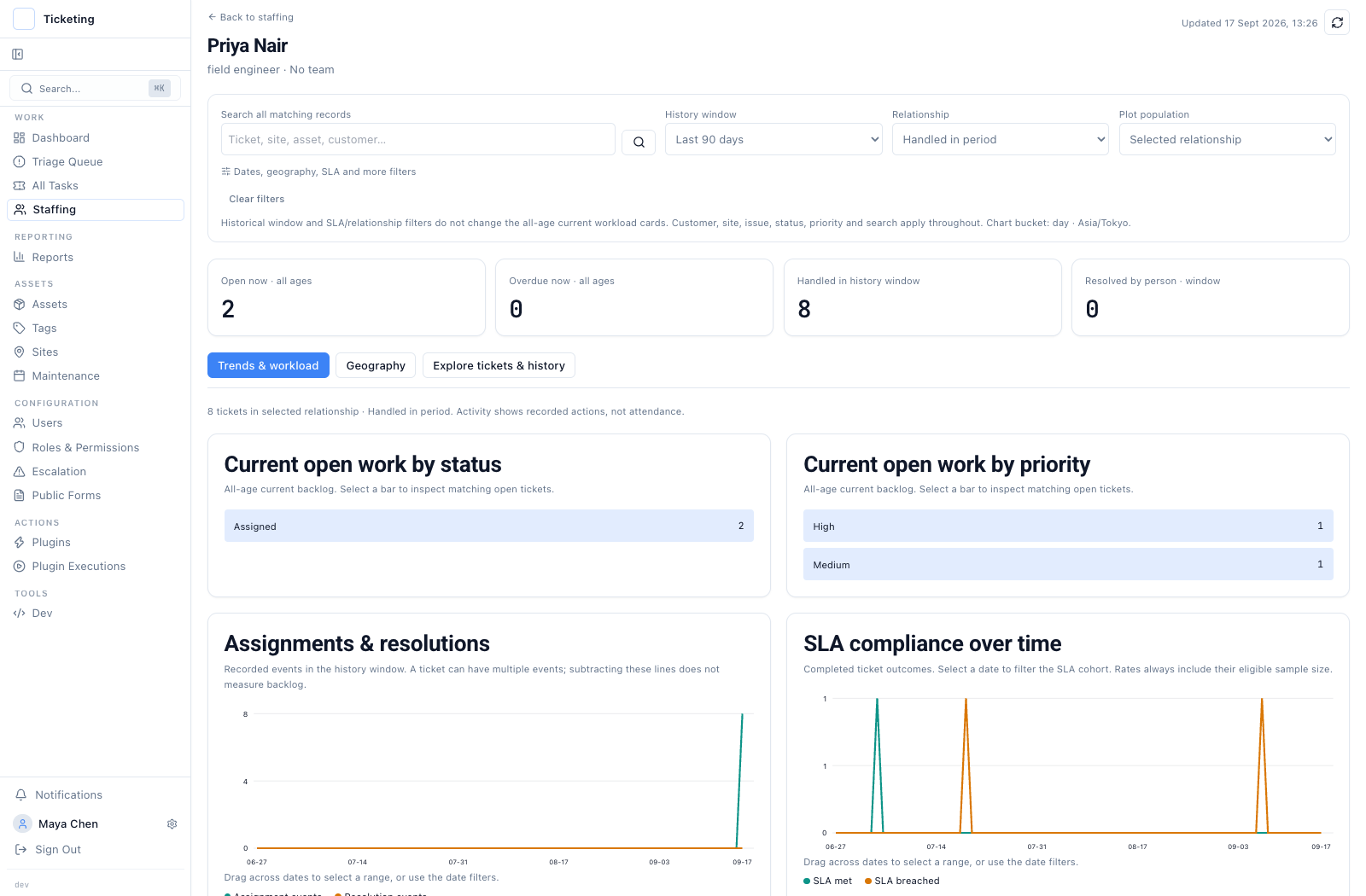
Priya’s profile separates open work now from the selected 90-day history. The screen uses fictional sample data.
Keep current work and history separate
The current-work cards include all open tickets, regardless of when they were created. The history window changes the handled and resolved totals instead. Filter by relationship (handled in period, currently assigned, previously assigned), then narrow by customer, site, issue, status, or priority. Select a bar or a date to open the matching ticket set, so every summary stays tied to the records behind it.
Recorded activity is an audit trail of actions, not attendance, availability, or productivity.
Read SLA outcomes with the ticket
The SLA view splits completed outcomes into met and breached groups, and each rate sits beside the number of eligible tickets. The target-versus-actual plot shows one completed ticket per point against its working-calendar allowance.
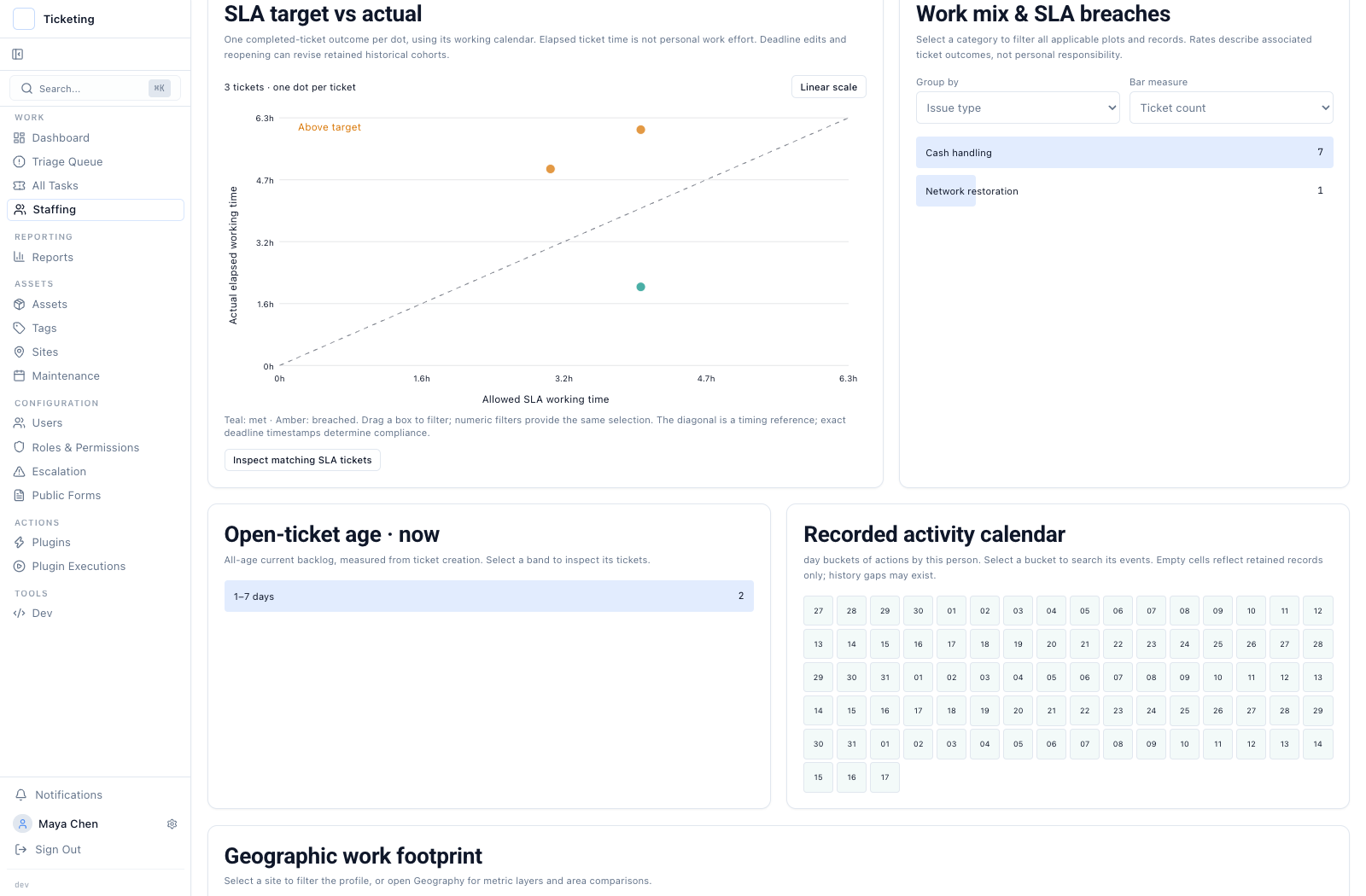
Each dot represents a completed-ticket outcome; the diagonal is a timing reference for investigation.
Elapsed ticket time is not Priya's personal work effort. Open a matching SLA ticket and check its timestamps, policy, status, and history first. For the clock itself, use the SLA deadline calculator.